
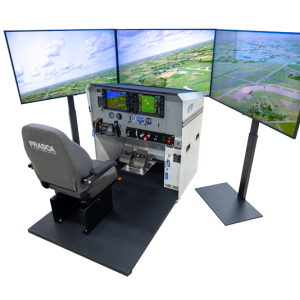
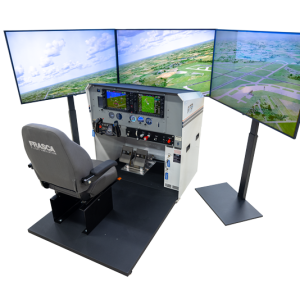
For less than the cost of one hour of dual instruction in an airplane, you can practice as much as you want for a low monthly fee. There is no limit to the number of hours you can fly.
Simulator Benefits
Unlimited Use
01
24/7 Access
When you sign up for one of our membership plans, you will have 24/7 access to the simulator. Fly at your convenience without being limited to the flight school’s hours of operation.
02
Instructor Not Required
Do you want to practice maneuvers or different techniques without the added cost of an instructor? At IFR Sim Solutions, you can fly the simulator independently. We understand that some pilots prefer to try different techniques without incurring additional instructor fees. You have the flexibility to use the device with or without an instructor.
03
Find the Membership that Works for You
-
4-Day Ground School plus 1-month of Unlimited Simulator Use
$875.00 -
Month to Month No long term contract
$475.00 / month -
1-Year Membership
$225.00 / month -
180-Day Membership
$300.00 / month
Frequently Asked Questions
What can I log?
- With an instructor sign-off, you can log up to 2.5 hours of flight time toward the Private Pilot certificate. There is no limit to the total amount of training that can be logged in an AATD
- Under 14 CFR Part 61 pilots can credit a maximum of 20 hours of instrument time.
- IFR-rated pilots can use an AATD to maintain their instrument currency by completing the following tasks: 6 Instrument approaches, holding procedures, and intercepting and tracking courses.
- If you are out of IFR currency, you can complete most of the Instrument Proficiency Check in the simulator
Is it only for IFR pilots?
No. Although mostly used for IFR training simulators are underutilized for the Private Pilot certificate. When training for the Private Pilot certificate a simulator provides valuable training for:
- Aircraft Familiarization – learn the aircraft, how the controls function, and how to use the avionics
- Basic Flight concepts
- Basic navigation techniques – how to use pilotage, dead reckoning, and tracking VORs & GPS courses.
- Practice emergency procedures – Learn what to expect and practice response.
- Fly for proficiency – practice maneuvers and approaches over and over until they become second nature.
Can I maintain IFR currency using the simulator?
Yes, If IFR-rated pilots can use an AATD to maintain their instrument currency by completing the following tasks, 6 Instrument approaches, holding procedures, and intercepting and tracking courses within the previous 6 months.
What are the advantages of using a simulator?
Using a flight simulator offers numerous advantages for pilots at all levels. One significant benefit is the ability to build and reinforce proficiency without the risks and costs associated with actual flight. FAA-approved simulators provide realistic training environments that help pilots develop muscle memory and minimize the negative transfer of skills to real-world flying.
Additionally, simulators allow for the safe practice of emergency procedures and the handling of various system failures, which might be too dangerous or impractical to conduct in a real aircraft. They also enable pilots to experience and navigate a wide range of weather conditions, enhancing their preparedness for diverse flight scenarios. Overall, flight simulators are invaluable tools for improving safety, efficiency, and confidence in aviation.
Will it save me money?
- Using a flight simulator for flight training provides substantial cost savings for students. Simulators significantly reduce the expenses associated with fuel, maintenance, and wear and tear on actual aircraft, which can be considerable over time. Additionally, simulators allow for training sessions to be conducted regardless of weather conditions, leading to more consistent and efficient use of time. This efficiency means students can progress through their training programs faster and at a lower cost. Moreover, the ability to repeatedly practice specific maneuvers and scenarios without incurring extra costs makes simulators a highly economical choice. Overall, incorporating simulators into flight training programs offers a cost-effective way to achieve comprehensive, high-quality pilot education.
- The national average for the number of flight hours for a person to obtain their Private Pilot certificate is between 55-70. (The FAA minimum is 40 hours) If a student pilot uses a simulator as part of their training, the number of hours is closer to 40 as opposed to 70. At a rate of $175.00 an hour for plane rental alone, this could result in savings of $3,500 to the student for the cost of their Private Pilot certificate.