
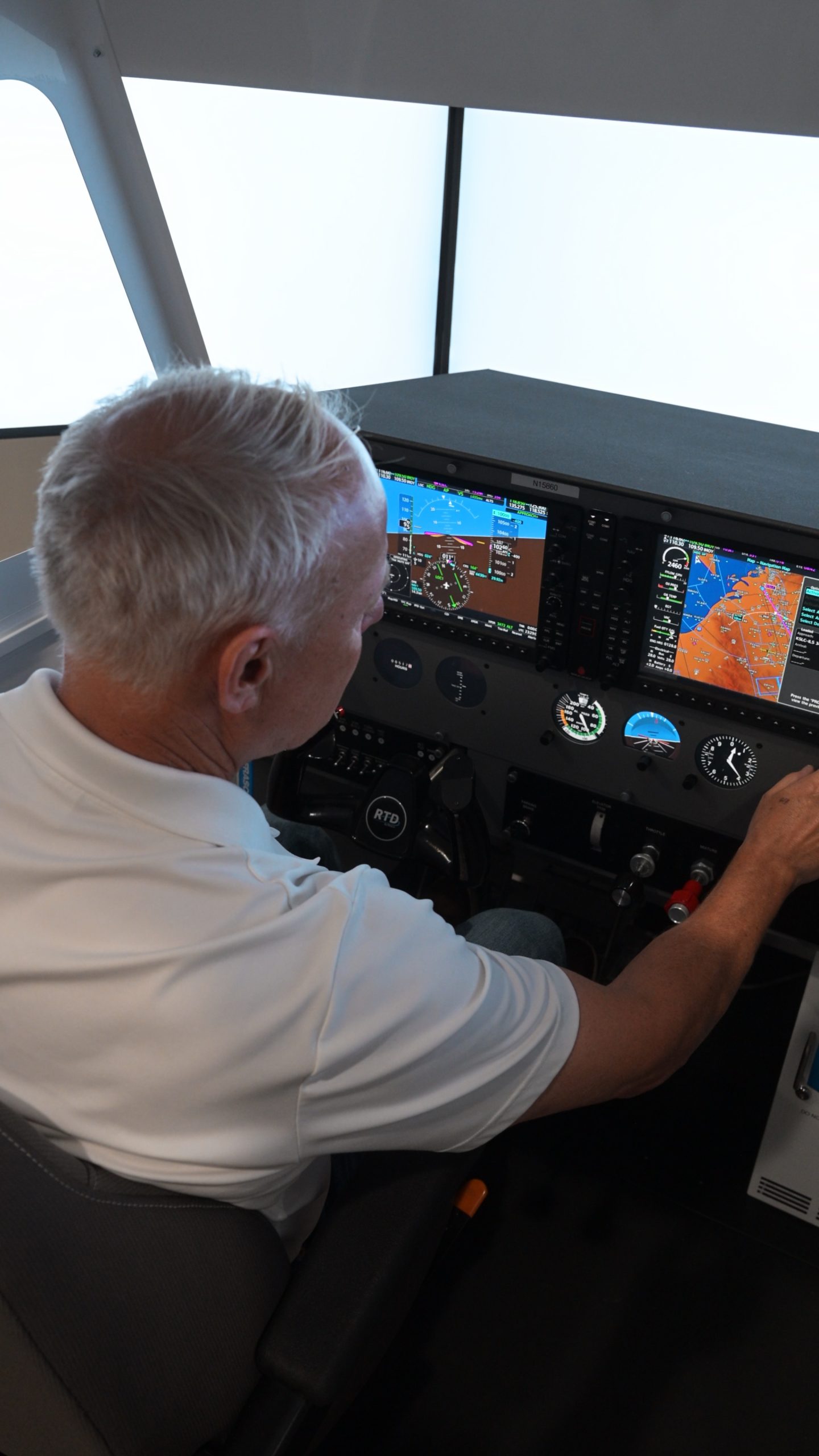
Incorporating a flight simulator into flight training significantly enhances learning efficiency and safety. Simulators allow pilots to practice procedures, instrument scans, abnormal scenarios, and decision-making in a controlled environment without the risks, costs, or time constraints of actual flight. Complex situations such as instrument failures, spatial disorientation, system malfunctions, and weather-related challenges can be safely replicated and repeated until proficiency is achieved. This targeted repetition builds confidence and procedural discipline, helping pilots develop strong IFR skills and judgment that directly transfer to the cockpit.
Flight simulators also provide a cost-effective and flexible training platform. Pilots can log meaningful training time without fuel, maintenance, or aircraft availability limitations, making it easier to stay current and proficient. Instructors can pause, replay, and debrief scenarios in real time, creating highly structured and efficient learning sessions that are difficult to replicate in the aircraft. By combining simulator training with real-world flying, pilots gain deeper understanding, sharper situational awareness, and improved safety margins—making simulators an invaluable tool in modern flight training.